168 Hours: What One Guard Post Actually Costs
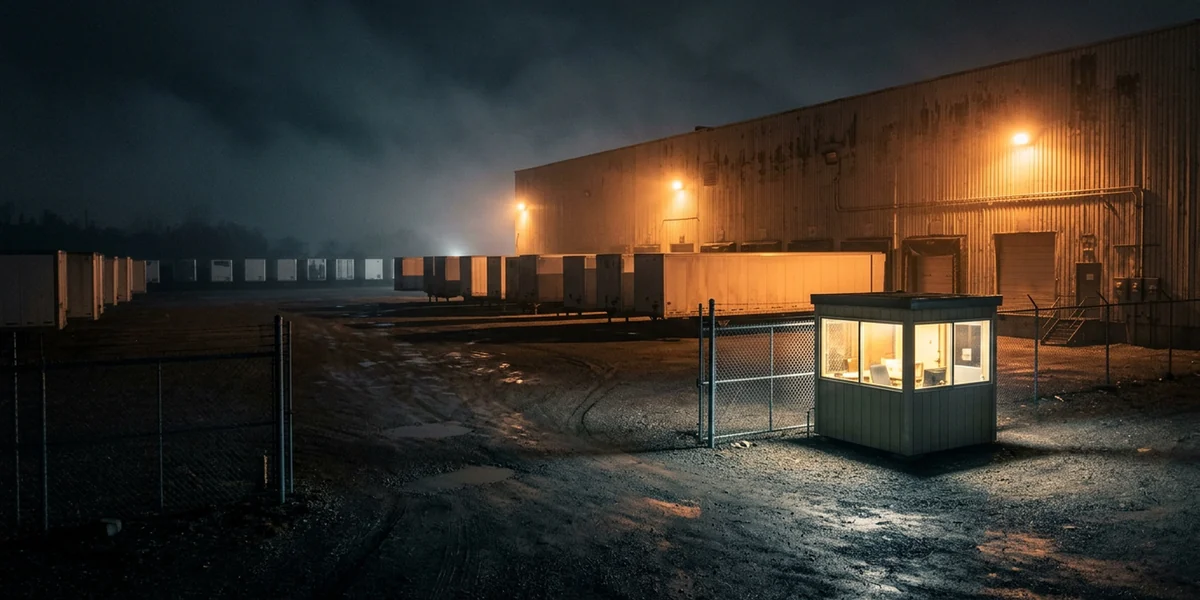
It's 2:10 AM at a distribution yard on the edge of the city. One guard sits in a booth watching a lot with nothing in it. Nothing has happened tonight, nothing happened last night, and the property manager reviewing the budget in the morning sees one line: one guard, overnight. The real number behind that line is larger than it looks. (This scene is an illustration, not a particular site.)
A Post Is Not a Person
A week has 168 hours. A guard works about 40 of them. Covering a single post around the clock therefore takes at least 4.2 guards, before anyone takes a vacation, calls in sick or is off for a statutory holiday. The post is one chair. The people needed to keep it filled are four or five. That doesn't show on a site walk. It shows on the invoice.
What It Costs, Using Only Public Numbers
Job Bank, the federal government's labour-market service, lists the Ontario wage for security guards at a median of $20.00 an hour, with a low of $17.95 and a high of $34.87. Ontario's minimum wage has been $17.95 since October 1, 2026.
At the median wage, one post covered 24 hours a day, every day (8,736 hours a year), costs $174,720 a year in wages alone, about $14,560 a month. At the minimum wage it's $156,811. An overnight-only post, 12 hours a night, comes to $87,600.
Those are floors, not prices. They leave out payroll costs, supervision, insurance and the agency's margin, so what an agency bills is higher. We haven't found a published billing rate we would stand behind, so we're not quoting one. Ontario also requires guards, and the agencies that supply them, to be licensed under the Private Security and Investigative Services Act. That requirement is reasonable, and it's part of why the rate is what it is.
What a Guard Does That Nothing Else Does
It's worth being straight about this, because the comparison isn't a contest with an obvious winner. A guard is physically there. A guard can speak to a person at the door, ask someone to leave a property, check a lock by hand, and notice that something is wrong before any sensor does. At a busy lobby, a venue with crowds or a site where people need to be let in and out all day, a guard is doing work a camera can't.
Where the Hours Go
The picture changes on a site that sits empty for most of the week: a yard, a parking lot, a building after closing. Most of a guard's hours there are spent watching a place where nothing is happening. The cost is paid for every hour; the value arrives in the few minutes when something does.
For those hours the question isn't “guard or no guard.” It's which of the 168 hours need a person standing on the property, and which only need someone to know, quickly and accurately, that something has happened.
The Other Way to Cover Those Hours
An alarm system with cameras and professional monitoring covers every hour of the week. When a sensor trips, the monitoring station sees what the system saw, and a person decides whether it's real. Ajax detectors, for instance, can send photos to the monitoring station along with the alarm, so the operator is looking at the event rather than guessing at it.
That step matters because of how police respond. Toronto has required a burglar alarm to be verified before police are asked to attend since September 10, 2018, and a verified event is treated differently from an unverified one. We went through how that works across the GTA in The Verification Gap.
What monitoring can't do on its own is stand at the door. That's where a guard response comes in. When an event is verified, the ULC-listed monitoring station we work with can dispatch a guard to the site alongside the police request, so a person arrives when one is needed without a guard sitting in a booth for the rest of the week.
The Arithmetic Over Several Years
A guard post costs the same every year. A security system is mostly paid for once, with monitoring as the ongoing cost. A 24/7 post at the median wage is $174,720 a year in wages, or $873,600 over five years, before any agency markup. Even an overnight-only post sets a high bar: a system would have to cost more than $87,600 to install and run for its first year before it cost more than that post's wages, and from the second year on, only the monitoring carries on.
Presence or Knowledge
A guard post pays for presence 168 hours a week. A monitored system pays for knowledge 168 hours a week and sends presence when it's needed. Neither is the wrong answer. The decision is how much of the week genuinely needs a person on site, and how much only needs the right person to find out in seconds.
If you'd like that worked out for your property, book a complimentary consultation. We'll go through your hours, which of them need someone on site, and what covering the rest would take. You can also see how our video monitoring works.